Product successfully added to your shopping cart
Quantity
Total
Continue shopping Proceed to checkout

New product
Warning: Last items in stock!
Availability date:
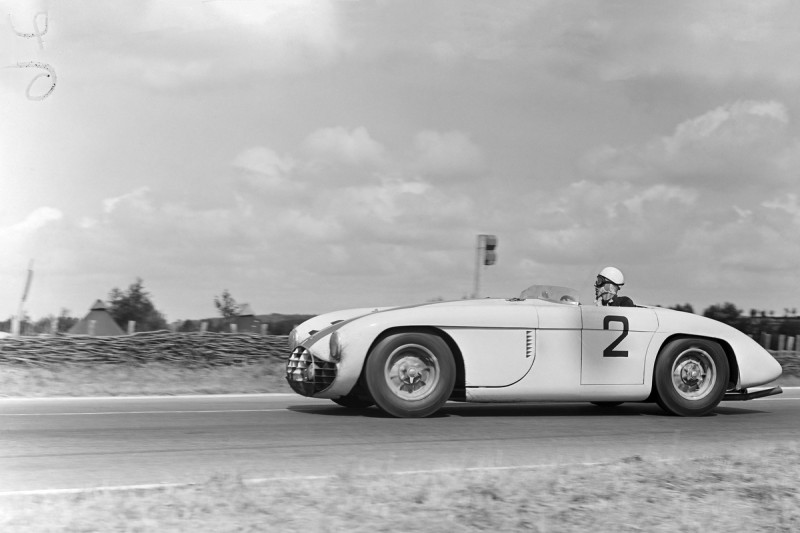
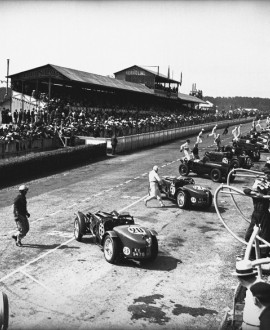
| Location | Le Mans |
| Prints issue | LIMITED EDITION 30 prints ONLY |
| Shooting date | 13 june 1953 |
| Original picture | Negative |
| Era | 1858-1960 |
| Colors | Black&White |
| Collection | Endurance |
| New products | New works |
Motorsport Images has the largest motoring picture collection in the world. The archive houses approximately 18 million images of which in the region of half are black and white negatives and glass plates. The library is made up of images from the world of motor sport since it began and every conceivable road car since it's invention. This incredible archive is the result of the amalgamation of a number of previously separate archives, which are now housed under one roof.
Many of the images are published pictures from the magazines owned and bought by Haymarket over the years and the archive contains the original prints from the very first 'Autocar' issue published in 1895 right through to the present day issue. 'The Motor' archive contains more sporting images with black and white negatives, glass plate and acetate from 1924 - subjects include road cars, sprints, hill climbs, motor shows and Grands Prix.
The original Teesdale Company supplied pictures to 'MotorSport' magazine (founded in 1924) and Motoring News (founded in 1955) and has over 4 million black & white negatives of motor racing events from the 1920's through to the early 1990's. The first colour images appeared in the mid 1950's and 30 years of unpublished 35mm colour images remain in the LAT Black Books. LAT now supplies the Haymarket Media Group, commercial clients, the worldwide media and agencies with motor sport coverage from around the world from Formula 1 to karting.
The 'Autosport' archive contains images from the world's leading motorsport weekly. Since 1950 all aspects of motor racing from Formula 1, Le Mans and sports cars, rallying, single seaters and club racing have been photographed and archived in colour and black and white formats.
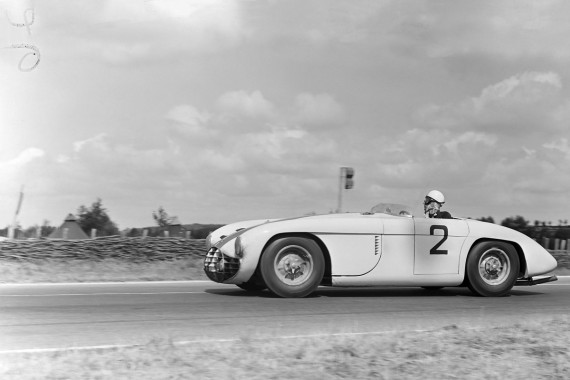
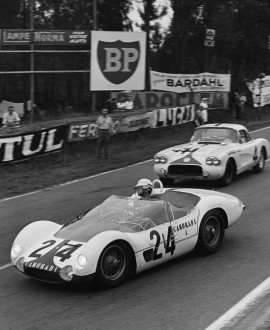
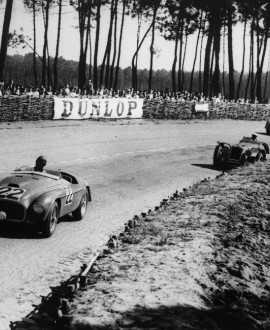
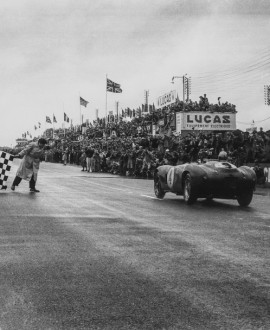
After devouring the Mulsanne Straight at over 250 km/h, John Fitch approached the Mulsanne Corner. The C-5R Cunningham was the fastest car of the 1953 24 Hours of Le Mans, thanks to its 5.5-liter Chrysler V8 engine. Combined with the chassis's robustness, these advantages allowed the Fitch/Walters crew to place their large prototype third on the podium, behind the Jaguar C-Type one-two finish. Following the decimation of the top teams, Briggs Cunningham's private team, the America's Cup skipper, would demonstrate that at the 24 Hours of Le Mans, it's better to hold on than to race, thanks to the solid design of its chassis powered by large American V8 engines. The prototype's drivers were no strangers to motorsport. Fitch had even flown Mustangs during World War II, shooting down several German aircraft. This 3rd place at Le Mans is almost a victory for the American delegation, who always bring their cars by road after disembarking from the ocean liner, having crossed the Atlantic and then landed in Le Havre.