Product successfully added to your shopping cart
Quantity
Total
Continue shopping Proceed to checkout

New product
Warning: Last items in stock!
Availability date:
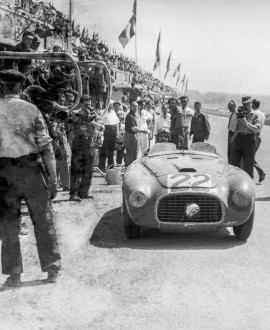
| Location | Le Mans |
| Prints issue | LIMITED EDITION 30 prints ONLY |
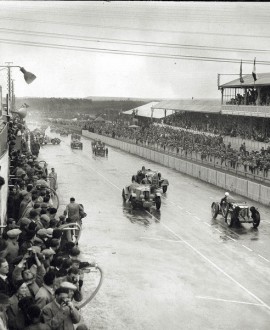
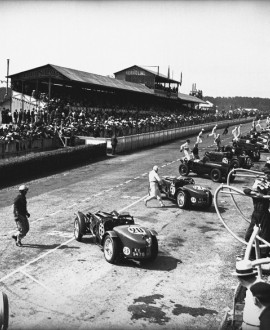
| Shooting date | 14 june 1952 |
| Original picture | Negative |
| Era | 1858-1960 |
| Colors | Black&White |
| Collection | Endurance |
| New products | New works |

Motorsport Images has the largest motoring picture collection in the world. The archive houses approximately 18 million images of which in the region of half are black and white negatives and glass plates. The library is made up of images from the world of motor sport since it began and every conceivable road car since it's invention. This incredible archive is the result of the amalgamation of a number of previously separate archives, which are now housed under one roof.
Many of the images are published pictures from the magazines owned and bought by Haymarket over the years and the archive contains the original prints from the very first 'Autocar' issue published in 1895 right through to the present day issue. 'The Motor' archive contains more sporting images with black and white negatives, glass plate and acetate from 1924 - subjects include road cars, sprints, hill climbs, motor shows and Grands Prix.
The original Teesdale Company supplied pictures to 'MotorSport' magazine (founded in 1924) and Motoring News (founded in 1955) and has over 4 million black & white negatives of motor racing events from the 1920's through to the early 1990's. The first colour images appeared in the mid 1950's and 30 years of unpublished 35mm colour images remain in the LAT Black Books. LAT now supplies the Haymarket Media Group, commercial clients, the worldwide media and agencies with motor sport coverage from around the world from Formula 1 to karting.
The 'Autosport' archive contains images from the world's leading motorsport weekly. Since 1950 all aspects of motor racing from Formula 1, Le Mans and sports cars, rallying, single seaters and club racing have been photographed and archived in colour and black and white formats.
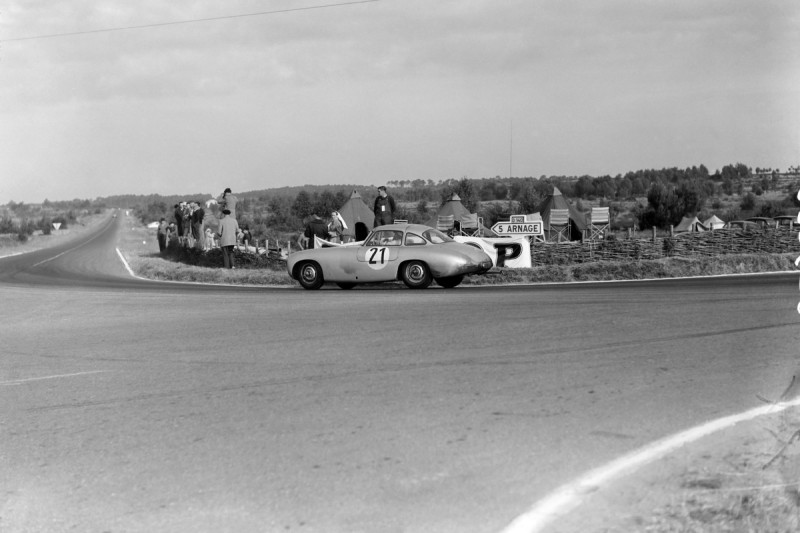
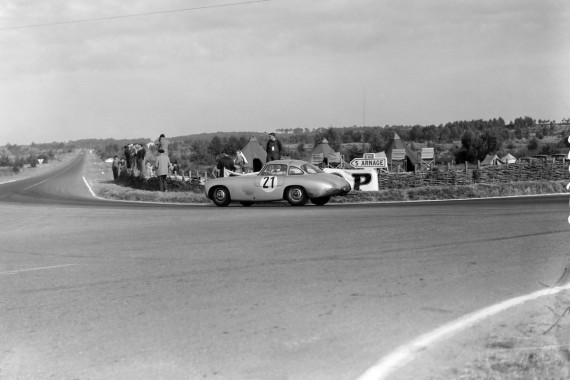
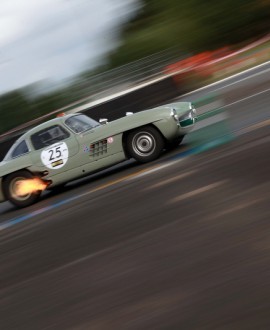
On race day, June 15, 1952, the Hermann Lang/Fritz Riess crew was photographed in the Mulsanne corner, at the start of the straight leading to Arnage. They had just taken the lead after the retirement of Pierre Levegh's Talbot, which had been four laps ahead of the last two Mercedes in the race.
Designed by Rudolph Uhlenhaut, an engineer for the Mercedes-Benz brand since 1936, the brand-new 300SL was a technological masterpiece. It featured a trellis frame, a lowered chassis, a 3-liter inline six-cylinder engine with a dry sump, and two gullwing doors, a requirement of the 24 Hours of Le Mans regulations, which mandated that closed cars have two access doors.
Despite chassis reinforcements on the sides, the beautiful German car weighed in at just over a ton, boasting nearly 200 hp and enormous torque for its time. Made reliable by Alfred Neubauer, the charismatic pre-war Mercedes team manager, with the help of factory drivers Karl Kling, Hans Klenk, Hermann Lang, and Fritz Riess, supported by two other drivers, the three W194s were evenly matched throughout the race, initially with spectacular bursts of speed from Ferrari, then Jaguar, and finally the powerful Talbots. Levegh, sensing the threat from the Mercedes on his tail despite his four-lap lead, refused to relinquish the wheel of his Talbot to his teammate. He ultimately broke a connecting rod 70 minutes before the end of the race, paving the way for a resounding one-two finish and Mercedes' first victory at Le Mans.